Senior Medical Expertise
Procedures are performed by highly qualified, board-certified interventional gastroenterologists with specialized training in complex therapeutic maneuvers.
Advanced GI Sciences & Interventional Endoscopy Unit
High-Precision Diagnostic, Therapeutic & Onco-Preemptive Gastroenterology at ARC
The Advanced GI Sciences and Interventional Endoscopy Unit at ARC is a premier destination for comprehensive digestive, biliary, and pancreatic care in Bangalore. Our facility brings together senior interventional gastroenterologists, high-definition digital visualization infrastructure, and minimally invasive techniques to treat both everyday gastrointestinal issues and complex hepatobiliary conditions.
By prioritizing advanced diagnostic precision, non-surgical internal interventions, and early tumor mapping, we help patients treat chronic digestive issues, manage complex biliary obstructions, and access preventative screenings with minimal discomfort and rapid recovery times.
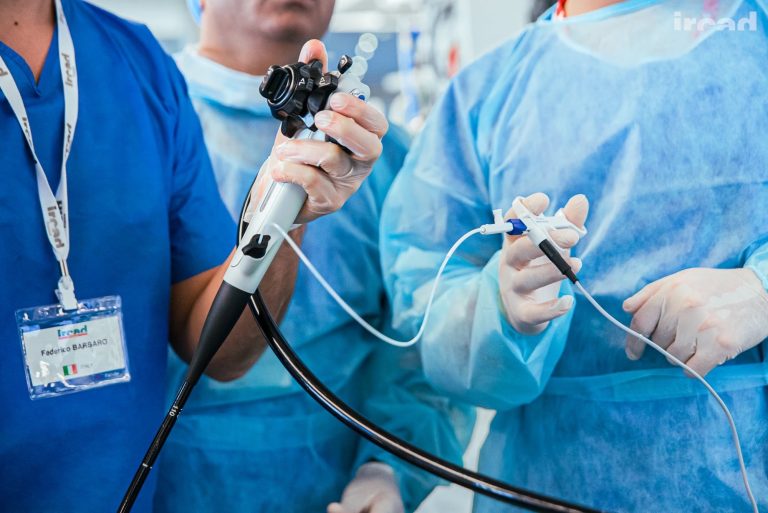
Procedures are performed by highly qualified, board-certified interventional gastroenterologists with specialized training in complex therapeutic maneuvers.
We utilize high-definition, narrow-band imaging (NBI) endoscopy systems that enhance blood vessel visualization to catch early cellular anomalies that standard white light might miss.
Because ARC is a specialized clinical facility rather than a high-volume, general emergency-room hospital, our procedure suites offer significantly lower risks of cross-infection providing a safer environment for seniors and immunocompromised individuals.
State-of-the-art procedure rooms equipped with dedicated recovery bays managed by specialized gastro-anesthetists for a seamless, same-day discharge.
Total transparency on procedure costs, laboratory investigations, and stent pricing with dedicated insurance desk support for hassle-free claims.
An upper endoscopy (Gastroscopy) allows our specialists to safely examine the lining of your esophagus, stomach, and duodenum (the first section of the small intestine) using a thin, highly flexible tube fitted with a micro-camera.
Common Indications: Chronic acid reflux (GERD), unexplained difficulty swallowing (dysphagia), persistent upper abdominal pain, chronic nausea, or vomiting blood.
Therapeutic Interventions: Beyond diagnostics, our team performs specialized treatments during the same session, including esophageal band ligation for bleeding varices, stricture dilation, and foreign body removal.
A colonoscopy provides a detailed, high-resolution evaluation of the entire structural health of your large intestine (colon) and rectum. It is globally recognized as the definitive tool for colorectal health tracking.
Common Indications: Chronic unexplained diarrhea, persistent constipation, blood in the stool, unexplained iron-deficiency anemia, unexplained weight loss, or routine screenings for individuals aged 45 and above.
Simultaneous Polypectomy: If our specialists locate a polyp (small pre-cancerous tissue growth) during your screening, it is instantly removed using miniature surgical snares. This eliminates the risk of future malignancy without requiring a separate surgery.
ERCP is an advanced specialty procedure combining upper endoscopy with real-time fluoroscopic X-ray imaging. It is utilized exclusively to diagnose and treat structural abnormalities inside the bile ducts, gallbladder, and pancreatic ducts.
Common Indications: Severe obstructive jaundice (yellowing of eyes and skin), common bile duct (CBD) stone migration, pancreatic tumors causing tract blocks, or post-surgical bile duct leaks.
Non-Surgical Biliary Clearances: ERCP serves as an alternative to invasive open biliary surgery. Through the endoscope, our clinicians can perform a sphincterotomy, extract complex stones, and place plastic or self-expanding metallic stents to instantly restore essential bile drainage.
What differentiates the Advanced GI department at ARC from high-volume multi-specialty chains is our targeted focus on early diagnosis, tumor mapping, and precision tissue management.
Our endoscopy suites do not just track localized symptoms — we specialize in Onco-Preemption: identifying, isolating, and clearing complex lesions, polyps, and deep biliary obstructions before they can evolve or complicate a patient's health timeline.
When an upper endoscopy or colonoscopy uncovers an abnormal mucosal lesion, simple sampling is rarely sufficient. Our clinicians perform targeted precision biopsies utilizing advanced optical enhancements. This provides our pathology department with ideal tissue margins for micro-staging and definitive mutation analysis, saving patients weeks of diagnostic waiting loops.
For patients experiencing advanced structural obstructions in the digestive or biliary tracts, our interventional ERCP capabilities function as critical life-enhancing measures. Rather than executing highly traumatic open operations to handle structural blockages, our specialists route specialized, high-grade plastic or Self-Expanding Metallic Stents (SEMS) endoscopically. This immediately bypasses blocks, rapidly dropping dangerous bilirubin levels, clearing jaundice, and restoring digestive functionality safely.
When complex structural anomalies or tissue malignancies are discovered through diagnostic scope assessments, the patient's care pathway is immediately elevated to ARC's internal multidisciplinary board. Our senior interventional gastroenterologists, onco-surgeons, radiation specialists, and medical oncologists collaborate directly under one roof to build a personalized, zero-delay treatment blueprint. This completely bypasses the standard administrative waiting queues common in generic hospital systems.
Ans: The overall cost depends on whether the procedure is strictly diagnostic or involves therapeutic actions (such as taking a biopsy or removing a polyp). Typically, a diagnostic Upper GI Endoscopy in Bangalore ranges from ₹5,000 to ₹12,000, while a Colonoscopy ranges from ₹8,000 to ₹20,000. Therapeutic procedures involving sedation or complex materials (like ERCP with stenting) carry specific pricing based on the chosen device models. At ARC, a transparent cost outline is always provided prior to scheduling.
Ans: No, these procedures are not painful. At ARC, all advanced diagnostics including colonoscopies and ERCPs are performed under local numbing throat sprays combined with conscious sedation or monitored twilight anesthesia. You will remain in a deeply relaxed, comfortable state throughout the procedure and will feel no physical pain or distress. Most patients have zero memory of the procedure after waking up.
Ans: For an accurate colonoscopy, your colon must be entirely clear of waste so the specialist can thoroughly inspect the tissue wall. You will be guided onto a clear liquid diet for 24 hours prior to your scan and prescribed a specific bowel-clearing solution to drink the evening before. Our clinical coordinators provide a simple, step-by-step preparation chart at the time of your booking.
Ans: A diagnostic upper endoscopy takes 15 to 20 minutes, a colonoscopy requires 30 to 45 minutes, and an interventional ERCP can take anywhere from 40 to 90 minutes. Because mild sedatives are used to ensure your comfort, you are not legally or medically cleared to drive or operate machinery for the remainder of the day. You must arrange for a family member or friend to accompany you home.
Ans: An MRCP is a completely non-invasive MRI imaging scan focused purely on mapping out the structures of the bile and pancreatic ducts; it cannot perform treatments. An ERCP is an invasive endoscopic procedure. If a doctor knows they need to actively fix a problem such as pulling out a trapped gallstone or widening a narrow duct an ERCP is selected because it allows tools to directly fix the issue during the scan.
Ans: Finding a polyp is a common clinical observation and not an immediate cause for alarm. While most polyps remain benign, certain types can slowly transform into colorectal cancer over several years. If a polyp is seen, our gastroenterologist will pass a micro-tool through the scope channel to safely cut and remove it right then and there. The tissue is then routinely routed to our pathology lab for verification.
Ans: Yes, when these diagnostic or therapeutic procedures are officially advised by a specialist to evaluate active clinical symptoms (like internal bleeding, chronic pain, or jaundice), they are covered by major private and corporate health insurance networks. ARC works closely with leading Insurance Providers and third-party administrators (TPAs) to process cashless claims smoothly.
Ans: You should contact our medical team immediately if you experience severe upper right abdominal pain paired with signs of biliary system obstruction:
Ans: ERCP is a highly precise and routine procedure, but because it accesses deep biliary channels, it carries a unique risk profile compared to standard endoscopies. The primary potential complications include minor bleeding, localized infection, or a temporary irritation of the pancreas known as post-ERCP pancreatitis. Our care teams monitor all daycare patients in recovery to maximize safety.
Ans: Preliminary visual observations are shared with you by your doctor as soon as your sedation wears off. If a tissue sample (biopsy) was taken or a polyp removed, the specimens are immediately routed to our pathology department. Certified histopathology reports are typically processed and ready for your follow-up consultation within 48 to 72 hours.
Access state-of-the-art digestive diagnostic and interventional care with senior gastroenterology specialists at ARC Cancer Hospital Bangalore.
Hospital Address: 210, Hombegowdanagar, 4, Hosur Main Road, Wilson Garden, Bengaluru, Karnataka 560029
Direct Access Helpline: +91 99000 15005